
Flavour guide
Peat and smoke in Scotch whisky
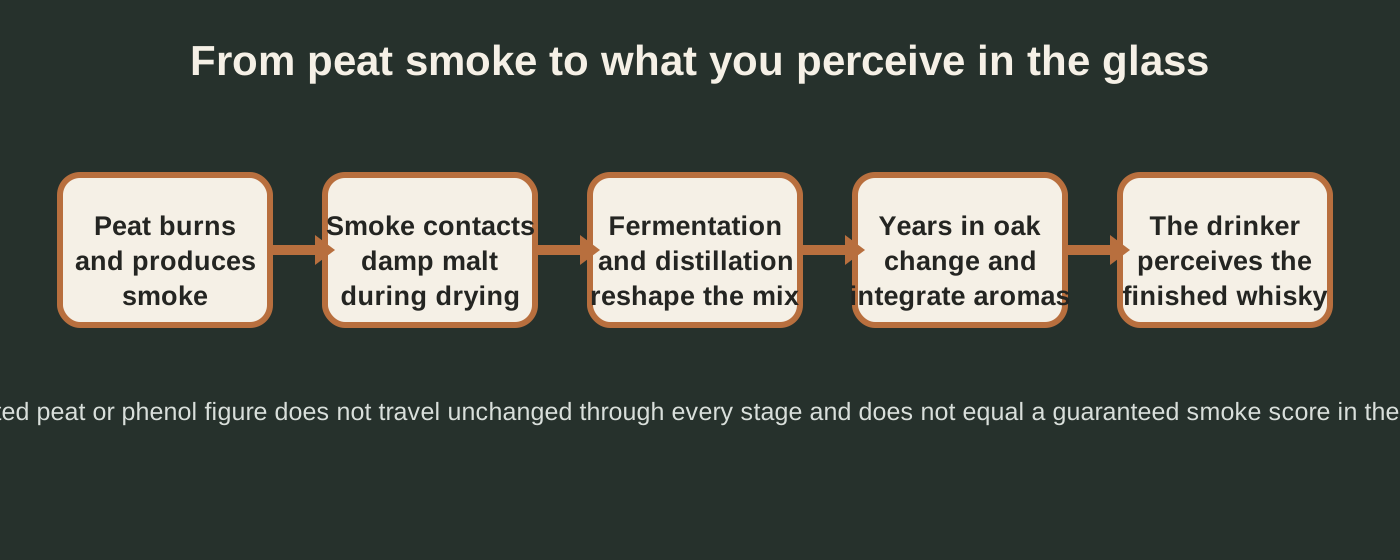
Peat is strongly associated with some Scotch whisky styles, but peat itself is not poured into the spirit. In peated malt production, smoke from burning peat can contact damp malt during drying. Smoke-derived compounds then pass through fermentation, distillation and maturation before some of their character reaches the finished whisky.
What peat is
Peat forms where waterlogged conditions slow the complete decomposition of plant material. Over long periods, layers of partly decomposed vegetation accumulate. Its composition depends on local plants and environmental conditions, so peat from different places is not chemically identical.
That variation helps explain why “peat smoke” is a family of sensory effects rather than one universal flavour. The smoke can contain many compounds, and the later production process changes which of those compounds remain prominent.
How smoke reaches malted barley
After barley germinates during malting, the process must be stopped by drying. Where peat is used as part of the fuel or smoke source, smoke can pass through the damp malt. Phenolic compounds from the smoke can become associated with the grain.
The degree of smoke exposure matters, but so do moisture, airflow, combustion conditions and the maltster's target specification. Two batches described as peated can therefore start with different smoke profiles.
What ppm means
Peat discussions frequently mention parts per million, abbreviated ppm. A quoted number commonly refers to a phenolic measurement associated with malt specification. It is useful production information, but it is often misunderstood as a direct sensory score.
A malt figure does not tell you exactly how smoky the mature whisky will taste. Fermentation, distillation, spirit cuts, maturation and dilution all intervene. Analytical methods and the stage at which a measurement is taken also matter when comparing figures.
Why two whiskies with similar peat figures can taste different
Still shape and reflux affect which volatile compounds reach the spirit. Spirit-cut decisions can favour or exclude different parts of the distillation run. Casks add their own aromas and can soften, mask or integrate smoky character over time. Bottling strength changes how aromas are released and perceived.
For that reason, a peat number works better as contextual production information than as a promise that whisky A will taste exactly twice as smoky as whisky B.
Common smoke-related descriptors
Wood smoke and bonfire
These terms describe smoke that reminds the taster of burning wood, fireplace embers or an outdoor fire. The association often feels dry and familiar rather than medicinal.
Ash and soot
Ash-like notes can resemble cooled fireplace ash, char or soot. They often appear later on the palate or finish in strongly peated whiskies.
Medicinal
Tasters may use words such as antiseptic, bandage or medicinal to describe phenolic associations. These are sensory comparisons. They do not mean medicinal ingredients were added to the whisky.
Earthy peat
Earth, damp soil, moss and forest-floor descriptions focus on peat's organic, earthy side rather than on active smoke.
Maritime smoke
Some smoky whiskies are described with brine, seaweed or coastal associations. Geography can shape the story around a whisky, but a maritime tasting note is still a sensory description rather than proof that sea spray entered the cask.
Peat and region are not the same thing
Islay is famous for several heavily peated single malts, which makes “Islay” and “smoky” easy to collapse into one idea. That shortcut fails because not every Islay whisky is heavily peated and smoky whisky is produced outside Islay.
Use region for geographic and historical context. Use production information and tasting evidence to understand peat level.
How maturation changes smoky whisky
Oak introduces new compounds while existing spirit compounds react and transform. Smoke can become more integrated with fruit, vanilla, spice or dried-fruit character. Some phenolic compounds may become less dominant over long maturation, although the outcome depends on the spirit and cask rather than on age alone.
How water can change smoke perception
Adding water lowers ABV and changes the balance of volatile compounds reaching your nose. A small dilution can make some aromas easier to perceive while muting or rearranging others. There is no universal “correct” amount of water.
If you want to compare systematically, measure the pour and water rather than counting uncalibrated drops. The dilution calculator can estimate the volume needed for a chosen target ABV.
How to taste peated whisky without overwhelming your palate
- Use a clean glass and a modest pour.
- Smell from a little distance before putting your nose deep into the glass.
- Record broad smoke style before searching for highly specific notes.
- Taste unpeated or lightly peated samples before heavily peated samples in a comparative flight.
- Add measured water gradually if the alcohol dominates your perception.
- Revisit the glass after several minutes because smoke, fruit and cask notes can change as volatile compounds escape.
Do not turn peat into a quality score
More peat does not mean better whisky. A heavily peated malt can be well balanced or clumsy. An unpeated whisky can be equally complex. Peat is one production and flavour variable among many.