
Maturation guide
How casks shape Scotch whisky
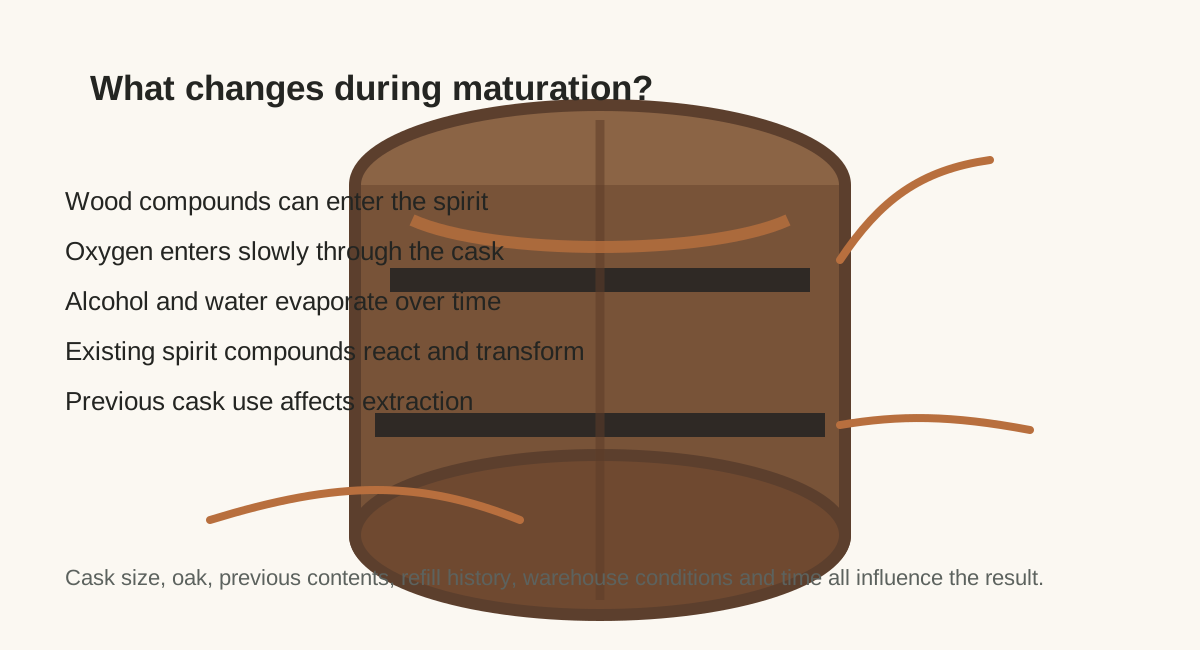
Oak maturation changes Scotch whisky through extraction, oxidation, evaporation and chemical reaction. The cask is therefore an active part of production, but “cask influence” is not one thing. Wood species, previous use, refill history, size, preparation, warehouse conditions and time all matter.
Scotch must mature in oak in Scotland
Scotch whisky must mature in Scotland in oak casks for at least three years. That legal minimum defines when spirit can become Scotch, but it does not establish an ideal age. Some casks become strongly wood-influenced relatively quickly while others develop more slowly.
Oak contributes flavour-active compounds
Oak contains compounds that can contribute vanilla-like, coconut-like, spicy, toasted, woody and tannic associations after cask preparation and maturation. Heat treatment during cooperage can transform wood chemistry, which helps explain why toast and char influence the eventual extractive profile.
Those associations should be treated as tendencies. The same oak type can produce different results depending on spirit character, previous use and how long the whisky remains in the cask.
Previous contents matter
Many Scotch casks previously held another alcoholic product. Ex-bourbon casks are common. Sherry-seasoned casks and casks associated with other fortified wines, table wines or spirits are also used in different maturation programmes.
Previous contents can leave compounds in the wood and influence how the cask is seasoned or prepared. However, shorthand such as “bourbon cask equals vanilla” or “sherry cask equals raisins” is too simplistic. Refill history, oak, seasoning and spirit character can push the final whisky in different directions.
First fill and refill
In Scotch usage, first fill commonly refers to the first time a cask is used to mature Scotch after its previous service or preparation. A refill cask has already held Scotch for one or more maturation cycles.
First-fill casks often provide stronger extractive influence than later refills because more readily extractable wood and previous-content compounds remain available. Refill casks can be valuable when a producer wants the distillate's own character to remain more visible over a long maturation.
Cask size changes surface contact
Smaller casks have more wood surface area relative to liquid volume than larger casks. That can accelerate some extraction effects, but faster extraction is not the same as faster overall maturation. Oxidation, evaporation and chemical integration develop on different timescales.
This distinction matters because a small cask can become woody before the spirit has developed the balance associated with longer maturation in a larger vessel.
Oak species are not interchangeable
American and European oak differ in structure and chemical composition, but species labels still do not tell the whole story. Forest origin, growth rate, seasoning, cooperage and previous use can all alter how a particular cask behaves.
Warehouse conditions influence evaporation
Whisky slowly loses alcohol and water through the cask. Temperature, humidity and airflow influence that loss and the rate at which the spirit moves into and out of the wood. Cask position can also matter inside some warehouses.
“The angel's share” describes this evaporative loss, but it should not be treated as a fixed annual percentage for every cask. Real losses vary with conditions and time.
What a cask finish means
A finish moves whisky into another cask for a later period of maturation after an earlier maturation stage. Producers use finishing to add or reshape cask influence without making the finishing vessel responsible for the whisky's entire maturation history.
When comparing finishes, ask what the whisky was like before finishing, what type of cask was used later, how long the finishing stage lasted if published, and whether the producer describes the cask as first fill, seasoned or refill.
Why colour can mislead
Darker colour can result from active oak, previous contents, maturation conditions and permitted colouring practices. It does not reliably reveal age. A younger whisky from an active cask may be darker than an older whisky matured in a relatively inactive refill cask.
Why older does not automatically mean better
Longer maturation gives more time for wood interaction, oxidation and evaporation, but excessive oak can dominate the spirit. Producers monitor casks because maturation quality depends on balance rather than on simply maximising time.
How to compare cask influence at home
- Choose whiskies with broadly similar peat and strength where possible.
- Compare clearly different cask programmes.
- Use the same glass shape and pour size.
- Taste without water first, then add measured water consistently if desired.
- Record fruit, sweetness, spice, wood, tannin and finish separately.
- Do not assume every difference comes from the cask if the distilleries or spirit styles are also different.
The flavour explorer can help organise descriptors, while the tasting notes builder records your own observations.