
Production guide
How Scotch whisky is made
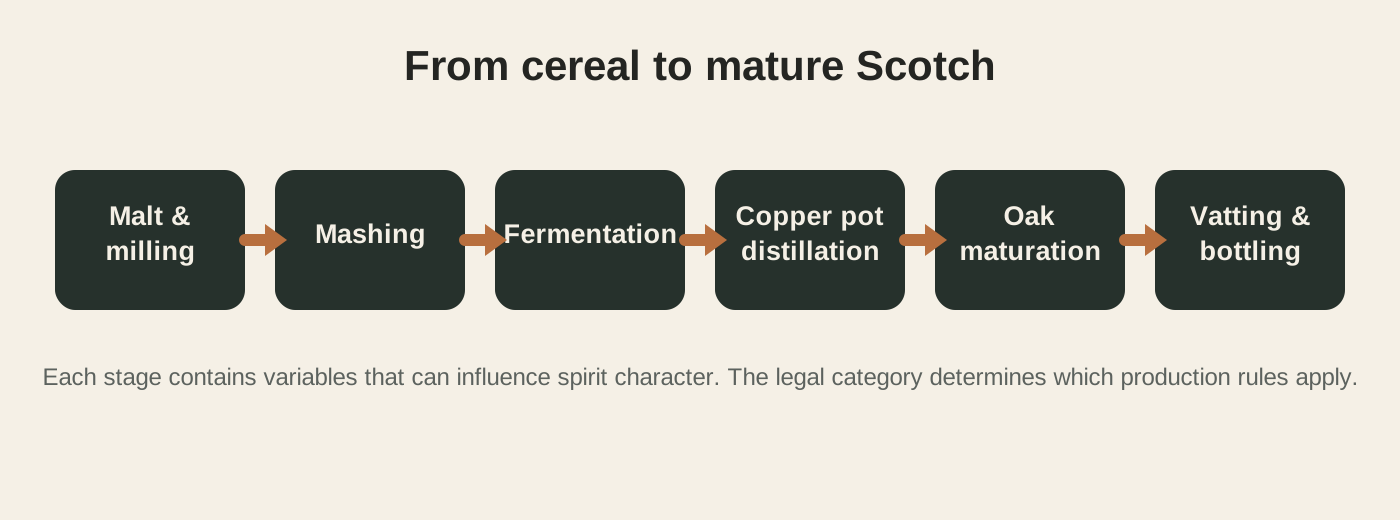
Scotch production is a chain of linked decisions rather than a single recipe. Raw materials, fermentation, distillation and maturation all change the liquid before bottling. The details also depend on the legal category. A Single Malt Scotch Whisky process is therefore not a complete description of how every Scotch whisky is made.
Start with the legal category
Single Malt Scotch Whisky uses water and malted barley without other cereals and is batch-distilled in copper pot stills at one distillery. Grain Scotch operates under a different raw-material and distillation framework. Blended categories are created later by combining qualifying malt or grain whiskies in the combinations allowed for that category.
Malting prepares barley for conversion
Barley contains starch, but yeast cannot ferment raw starch directly into alcohol. Malting allows enzymes in the grain to become active. The barley is steeped, germinated and then dried to arrest germination while retaining the enzymatic potential needed during mashing.
Peat may be used as a fuel during malt drying for some styles. Smoke can introduce phenolic compounds to the malt, but peat is optional. Many Scotch whiskies are produced from unpeated malt.
Milling turns malt into grist
Dried malt is milled into grist. Distillers usually want a controlled balance of husk, grits and flour because the grist must expose starch while still allowing liquid to move through the mash efficiently. Milling is an operational step, but it can affect extraction and process consistency.
Mashing extracts fermentable material
Grist is mixed with warm water in a mash vessel. Enzymes convert starch into soluble sugars, producing sweet wort. Distilleries can differ in water additions, temperatures, wort collection and how clear or cloudy the wort is when it reaches fermentation.
Wort clarity can influence fermentation character because solids and lipids affect the environment in which yeast works. That does not make one approach universally superior. It gives distillers another way to shape the new-make spirit they want.
Fermentation creates more than alcohol
Yeast converts fermentable sugars into ethanol and carbon dioxide, but fermentation also generates many aroma-active compounds. Esters, higher alcohols, acids and other compounds created or transformed during fermentation can later survive distillation or react further during maturation.
Fermentation time matters because microbial and chemical activity changes as the wash develops. A longer fermentation does not guarantee a better whisky, but it can alter the balance of compounds available to the still.
Single malt uses copper pot stills
Single Malt Scotch Whisky is batch-distilled in copper pot stills. Many distilleries use two distillation stages: a wash still first and a spirit still second. Some operating traditions differ, so a two-still description should be treated as common rather than universal.
Still shape matters because it affects reflux, vapour path and copper contact. Tall necks, boil balls, lyne-arm angles and condenser design can change how readily heavier or lighter compounds reach the receiver. Heating rate and charge composition also influence the run.
Copper changes the spirit
Copper is chemically active during distillation. It can react with sulphur-containing compounds and influence the character of the spirit. The amount and location of copper contact therefore matter alongside still geometry.
The spirit cut selects what goes into cask
The spirit-still run changes over time. Distillers separate early and late portions from the central spirit cut selected for maturation. Different compounds emerge in changing proportions during the run, so cut points have a direct effect on new-make character.
A wider or narrower cut can change the balance of fruity, cereal, sulphury, oily or heavier notes. Distillers manage this together with fermentation and still operation rather than treating the cut as an isolated setting.
New-make spirit is not yet Scotch whisky
Freshly distilled spirit needs qualifying maturation before it can become Scotch whisky. It must mature in Scotland in oak casks for at least the legal minimum period. During those years, the spirit extracts compounds from wood, loses some volatile material, reacts with oxygen and undergoes numerous chemical transformations.
Cask history matters
A first-fill cask usually provides a different level of extractive influence from a cask that has already matured Scotch several times. Previous contents such as bourbon or fortified wine can influence what remains in the wood and how the cask is prepared. Oak species, cask size, toast, char and seasoning practices also matter.
The cask and maturation guide examines those variables in more detail.
Warehouse conditions change the pace
Temperature and humidity influence evaporation and interaction between spirit and wood. Warehouse construction, cask position and local climate can all contribute. Scotland's climate is important context, but two casks in the same warehouse can still develop differently because the wood itself is variable.
Vatting, blending and preparation for bottling
After maturation, producers may combine casks to build a consistent expression, create a batch, assemble a blended category or prepare a single cask for bottling. Water may be added to reach bottling strength. Filtration and permitted colouring practices can vary by producer and expression.
Why identical recipes still do not produce identical casks
Whisky production contains biological and natural materials that vary. Barley batches differ. Fermentations fluctuate. Oak trees are not identical. Individual casks develop at different rates. Producers therefore rely on sensory evaluation, production records and cask management rather than assuming that every cask from one production run will mature identically.
Follow one variable at a time
If you want to understand why two whiskies differ, compare one production variable where possible. A tasting of similar unpeated malts with different cask programmes can highlight oak influence. A peated and unpeated expression from the same producer can help isolate smoke more effectively than comparing two unrelated distilleries with completely different production systems.